
In the pursuit of justice under the Protection of Children from Sexual Offences (POCSO) Act, effective legal representation is paramount. Engaging the services of the best POCSO defense lawyer in Guwahati ensures a comprehensive understanding of the intricate legal landscape. These professionals employ key legal tactics and procedural safeguards to protect the rights of the accused while navigating the complexities of such sensitive cases. With the best POCSO defense lawyer in Guwahati, individuals can be assured of a robust defense that aligns with the latest legal standards and practices.
Facing a POCSO conviction is a life-altering event, but it is not the final word. Advocate Biplop Konwar explains that the best POCSO defense strategy involves a meticulous challenge to the “reverse burden of proof” at the appellate level. At the Gauhati High Court, success often hinges on dismantling the “sterling quality” of the evidence provided by the prosecution.
K.D. Law Associates brings expert appellate advocacy to help clients navigate the complexities of Sections 29 and 30 of the Act. By scrutinizing inconsistencies in Section 164 statements and highlighting flaws in age determination, it is possible to rebut statutory presumptions. Our firm’s strategic approach recently secured a major acquittal for a client facing 20 years of imprisonment, achieving liberty within 16 months. If you are seeking a POCSO appeal lawyer in Guwahati to secure an acquittal, a deep dive into the facts and a rigorous cross-examination of the medical and oral evidence are your strongest tools for justice.
In the landscape of Indian criminal law, the foundational principle is usually “innocent until proven guilty.” However, the Protection of Children from Sexual Offences (POCSO) Act turns this tradition on its head. For an accused, the legal battle doesn’t start at a neutral zero, it starts from behind the finish line.
Based on my decade of experience defending complex POCSO trials, I’ve seen firsthand how the “reverse burden of proof” can dismantle a person’s life before a single witness is even called.
1. The Presumption of Guilt (Sections 29 & 30) POCSO
The most daunting aspect of a POCSO case is the statutory presumption. Unlike standard criminal trials where the prosecution must prove every element beyond a reasonable doubt, POCSO shifts this weight.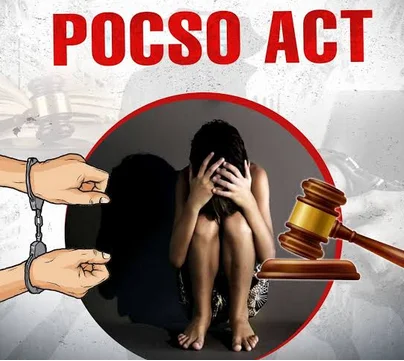
- Section 29 (Presumption of certain offences): Once a person is prosecuted for specific offences under the Act, the Special Court shall presume that the accused committed the offence unless the contrary is proved.
- Section 30 (Presumption of culpable mental state): This section presumes the accused had the “intent” or “knowledge” necessary for the crime. The burden is on the accused to prove they did not have such a mental state.
The moment an FIR is registered, the law effectively views the accused through a lens of guilt. This makes securing bail at the initial stage exceptionally difficult unless the allegations are demonstrably vague, vexatious, or procedurally flawed.
2. Case Study: Overcoming the Presumption
To understand how a strong defense can overcome these heavy legal presumptions, we can look at the strategic reversal of a high-stakes conviction involving a 20-year sentence.
The Allegations
The father of a minor girl lodged an FIR alleging that her volleyball coach (the appellant) took her to Guwahati for a Selection Game, but she failed to return as expected. Charges were subsequently framed under Sections 366 and 376(3) of the IPC and Section 6 of the POCSO Act. The Trial Court initially convicted the appellant, sentencing him to 20 years of imprisonment.
The Strategy for Appeal
The conviction was challenged by focusing on the “sterling quality” of evidence—a judicial standard that requires a solitary witness’s testimony to be so robust and truthful that it leaves no room for doubt.
- The Age Factor: The defense highlighted an ossification test suggesting the victim was older than alleged. This created vital “reasonable doubt” regarding her minority, which is the jurisdictional trigger for POCSO.
- Inconsistent Testimony: Significant infirmities were identified in the victim’s statements. For a conviction to stand on a single testimony, that witness must be unwavering. By identifying contradictions between her Section 161 and 164 statements and her trial testimony, the “sterling” nature of the evidence was dismantled.
- Negating Kidnapping: It was proven that the father had initially given permission for the girl to accompany the coach. This authorization fundamentally negated the element of “taking” or “enticing” required for a kidnapping charge.
- Medical Evidence: The defense demonstrated that the medical reports were not conclusive regarding sexual intercourse, creating a gap between the oral allegations and physical facts.
The Outcome
The Court found that the victim’s testimony suffered from significant inconsistencies and lacked the “sterling quality” required to sustain a conviction. Consequently, the conviction was set aside. The appellant, who had been facing 20 years, was acquitted and set at liberty within 16 months of his conviction.
3. The Two Pillars of a Strong Defense
Success in these cases hinges on two critical areas of legal combat:
Rebutting Sections 29 & 30
An accused does not necessarily have to prove innocence beyond a shadow of a doubt. Instead, the goal is to provide a “preponderance of probability”—showing the court that it is more likely than not that the event did not occur as described. This is achieved through a combination of alibi evidence, electronic records (CDR/CCTV), and demonstrating ulterior motives.
Scrutinizing “Sterling Quality”
In many POCSO cases, the victim’s statement is the only evidence. If that statement is riddled with contradictions or shows signs of “tutoring” by parents or police, the statutory presumption can be shattered. A meticulous cross-examination is the only tool that can reveal these cracks.
Conclusion
A POCSO charge is not a final verdict. While the law is designed to be stringent to protect children, it also requires that the evidence meets a high standard of truth. Even when the burden is reversed, a meticulous legal strategy and a deep dive into the facts can ensure that the truth prevails.
Legal Tip: Always prioritize the age determination process and the consistency of the Section 161 and 164 statements. These are often the keys to the “legal door” that leads to an acquittal.
With regards
Biplop Konwar
Advocate Gauhati High Court
https://www.facebSection 138: Your Legal Recourse in Cheque Bounce Casesook.com/
